Taming light energy
Light, exactly where you want it
RayMapr computes the shape of lenses and mirrors that steer an LED’s light onto the area to be lit, and nowhere else. Even when the beam has to stop dead.
A hard optics problem to solve?
An LED shines in every direction
An LED emits its light into a wide cone. To turn it into a low beam, a streetlight or a spotlight, you need optics that redistribute it to a precise photometry: plenty of light where it is needed, little or none elsewhere.
The hardest case is the cut-off: an intense beam below a line, almost nothing above it, so that nobody is dazzled. It is still often obtained by placing a shield in front of the source. The shield cuts sharply, but it stops the light instead of redirecting it. The lost energy is paid for in LEDs, in watts and in heat.
Designing non-imaging optics that do better remains a matter of trial and error, often taking several weeks per project. RayMapr brings solutions that cut this design time drastically.

Our approach
RayMapr starts from the other end of the problem. You describe the real source, an LED of finite size rather than an ideal point, and the light distribution you want on the target. Our software computes the freeform surfaces that transport one onto the other: every ray is sent to its place, nothing is masked.
The computation rests on optimal transport, a mathematical theory that goes back to Monge in the 18th century, and on more than ten years of research. It runs on GPUs, where millions of rays are traced in parallel. The result is an optical component made of smooth surfaces described in NURBS, as in CAD: it opens in mechanical design tools and goes to machining or injection moulding without conversion.

Applications
A set of methods for every complex optic: describe the source and the target distribution you want, and RayMapr computes the optical component that produces it. Lens or mirror, one or several freeform surfaces. Targets can be discrete or continuous densities: the strictest standards, met with margin, up to full-scale images.
Two free surfaces, computed together
With one free surface, you choose where the light goes, but you are stuck with the Fresnel losses. With two, you also optimise the energy distribution. Our workflow optimises several surfaces globally. Below, a lens computed for a lamp hanging above a T-shaped crossing of warehouse aisles.
Five surfaces, all freeform
A total internal reflection (TIR) lens collects the light of an LED along two paths: the centre goes through a small lens, the edges are folded back by total internal reflection on the flank. That makes five optical surfaces: the entrance and exit of the centre, the side entrance, the reflecting flank and the exit crown.
The usual tools freeze most of them as surfaces of revolution with a few parameters, and only optimise what is left. RayMapr computes all five surfaces as freeform, with no imposed symmetry, from the requested beam: a disc, a uniform square, a strip. The part keeps the same footprint and demoulds.

The cut-off is in the surface, not in front of it
Low beams, bicycle headlamps, train headlights: the standards demand a sharp cut-off line, plenty of light below it, almost none above. The usual solution puts a shield in front of the source and loses all the light it stops.
RayMapr forms the cut-off with the surface itself: every ray from the LED is sent to its place, below the line. No shield, so no lost light, and margin on the standard instead of a tuning at the limit. The targets are those of the regulations: UN R149 and FMVSS 108 for automotive, StVZO and ISO 6742-1 for bicycles, EN 15153-1 for railways, EN 13201 for road lighting.

All the light composes the image
A gobo or a stencil forms an image by stopping light: everything outside the drawing is lost. A computed optic blocks nothing: it redistributes the light so that all the energy of the source composes the image, gradients included. A lens projects a character; a mirror, in sunlight, paints a portrait on a wall without any electricity. The drawing is the input, the surface is the result.


Showing a building at its best
A building lit with a wide beam also lights up the sky, the neighbouring roofs and the residents’ windows. An optic computed for the facade puts the light on the stone and nowhere else: less power, no halo, and a drawing of light that follows the architecture. In sunlight, a freeform mirror can even replace the floodlight.


What about your imaging problems?
RayMapr was born in non-imaging optics: no image is formed, energy is distributed. But the tools are the same on the other side of the fence: freeform surfaces, massive GPU ray tracing, global optimisation of several surfaces at once, NURBS output. Off-axis freeform optics for a head-up display or an augmented-reality headset, a gradient-index (GRIN) lens where the rays bend inside the material, a metasurface whose phase profile has to be computed, a system whose aberrations must be corrected across the whole field: the questions change, the methods carry over.
We would very much like to learn more about your imaging problems. Write to us: we will do everything we can to help you develop your imaging optics.
RayMapr in figures
-
>70%
of the LED’s light in the useful beam, for a cut-off optic computed by RayMapr.
-
<30%
often, with shield-based designs, which mask part of the source to form the cut-off.
-
>10 years
of research on optimal transport applied to optics, since 2012.
The team
Two optimal transport mathematicians and a high-performance computing engineer, working together on freeform optics since 2020.
-
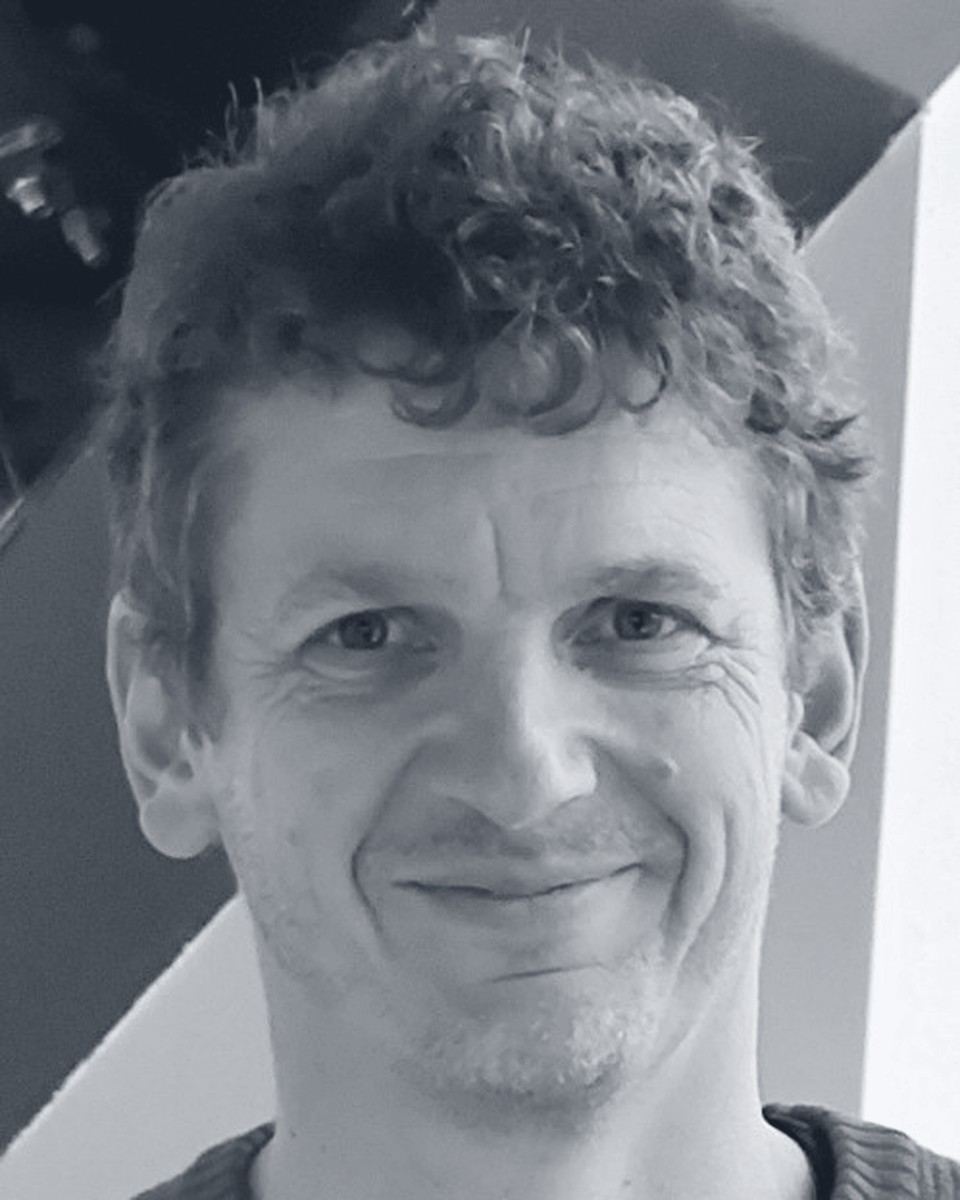
Boris Thibert
President
Boris Thibert is a professor of applied mathematics at Université Grenoble Alpes, in the Laboratoire Jean Kuntzmann. He is an expert in applied geometry and optimal transport for optical design.
-
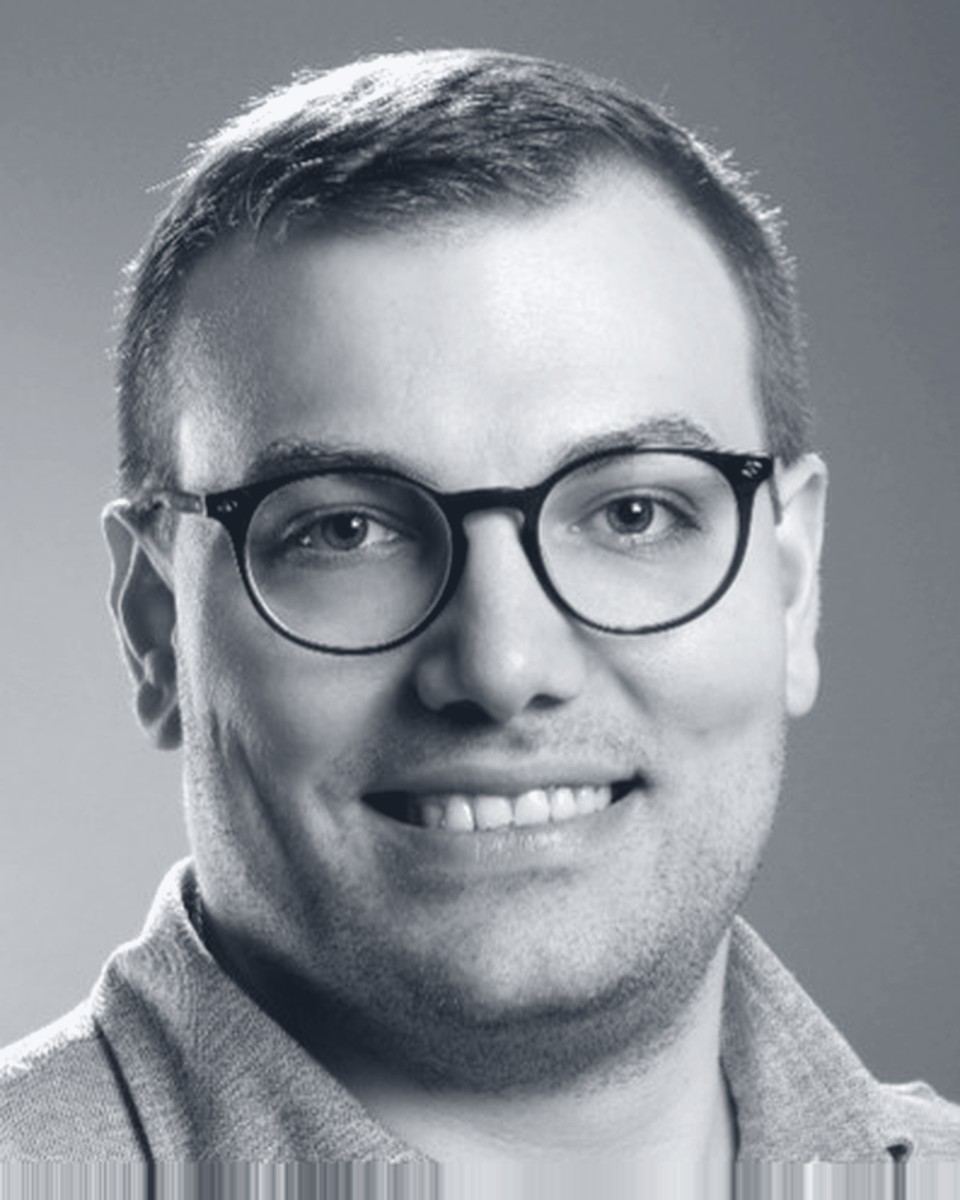
Jean-Baptiste Keck
CEO and CTO
Jean-Baptiste Keck is an engineer with a PhD in applied mathematics. An expert in distributed GPU computing and numerical methods, he has been the lead developer of the RayMapr software since 2020.
-
Quentin Mérigot
Scientific advisor
Quentin Mérigot is a professor of applied mathematics at Université Paris-Saclay, in the Institut de mathématique d’Orsay, and at École normale supérieure. He is an expert in optimal transport and numerical methods.


The research behind RayMapr
RayMapr builds on published work carried out at Laboratoire Jean Kuntzmann (Université Grenoble Alpes) and in Orsay (Université Paris-Saclay), France. A selection:
- J. Meyron, Q. Mérigot, B. Thibert Light in power: a general and parameter-free algorithm for caustic design ACM Transactions on Graphics, 37(6)2018
- Q. Mérigot, B. Thibert Mirrors, lenses and Monge–Ampère equations European Mathematical Society Magazine, 1202021
- J. Kitagawa, Q. Mérigot, B. Thibert Convergence of a Newton algorithm for semi-discrete optimal transport Journal of the European Mathematical Society, 21(9)2019
- Q. Mérigot, J. Meyron, B. Thibert An algorithm for optimal transport between a simplex soup and a point cloud SIAM Journal on Imaging Sciences, 11(2)2018
- Q. Mérigot, B. Thibert Optimal transport: discretization and algorithms Handbook of Numerical Analysis, vol. 22, Elsevier2021
Tell us about your optics
A source, a target photometry, space constraints? Tell us about your case and we will tell you what our expertise can bring you. RayMapr is a company being set up in Grenoble, France; incorporation is planned for January 2027.