
Demonstrator
A bike headlight that lights the road, not the eyes
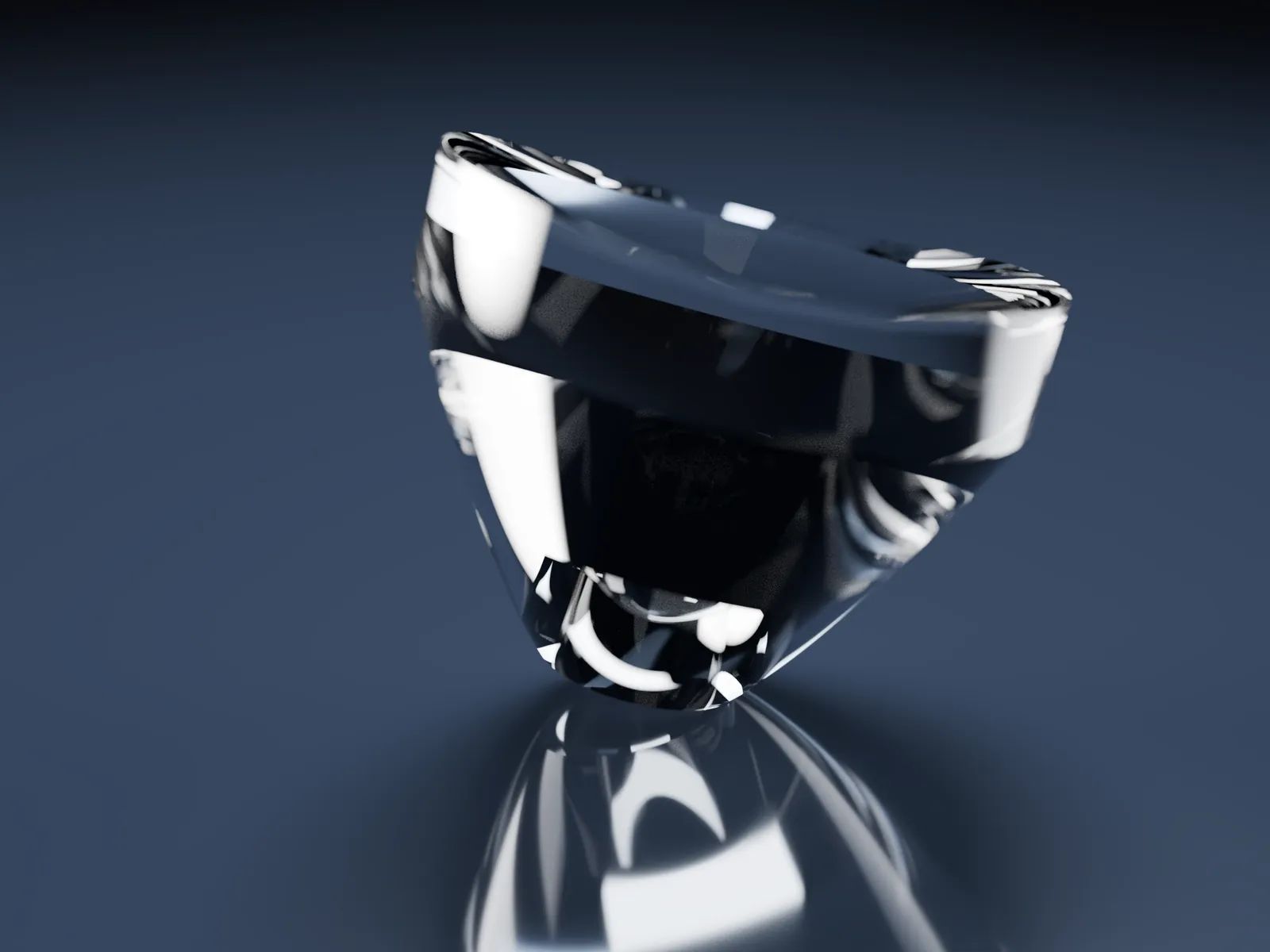
A single PMMA part, computed by RayMapr for a Cree XP-P LED, designed to meet a bicycle headlight standard.
Everything below is rendered from the design files and the ray tracing of our software. Nothing is drawn by hand.
At night, two opposite demands
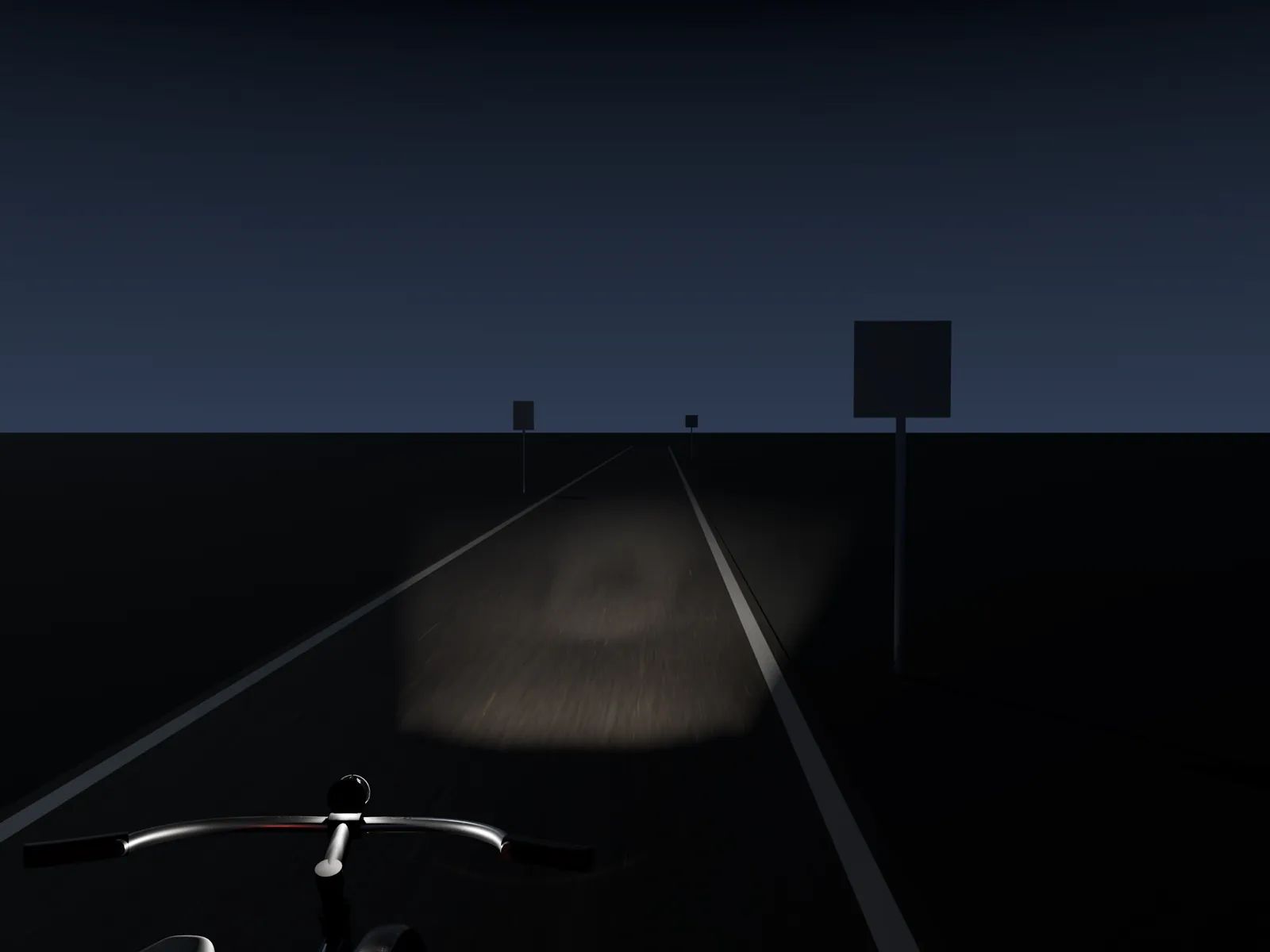
A bike headlight must light far ahead, without dazzling the people coming the other way.
The chosen standard enforces it with a cut-off: nearly all the light below a horizontal line, almost none above it.
A sharp cut-off
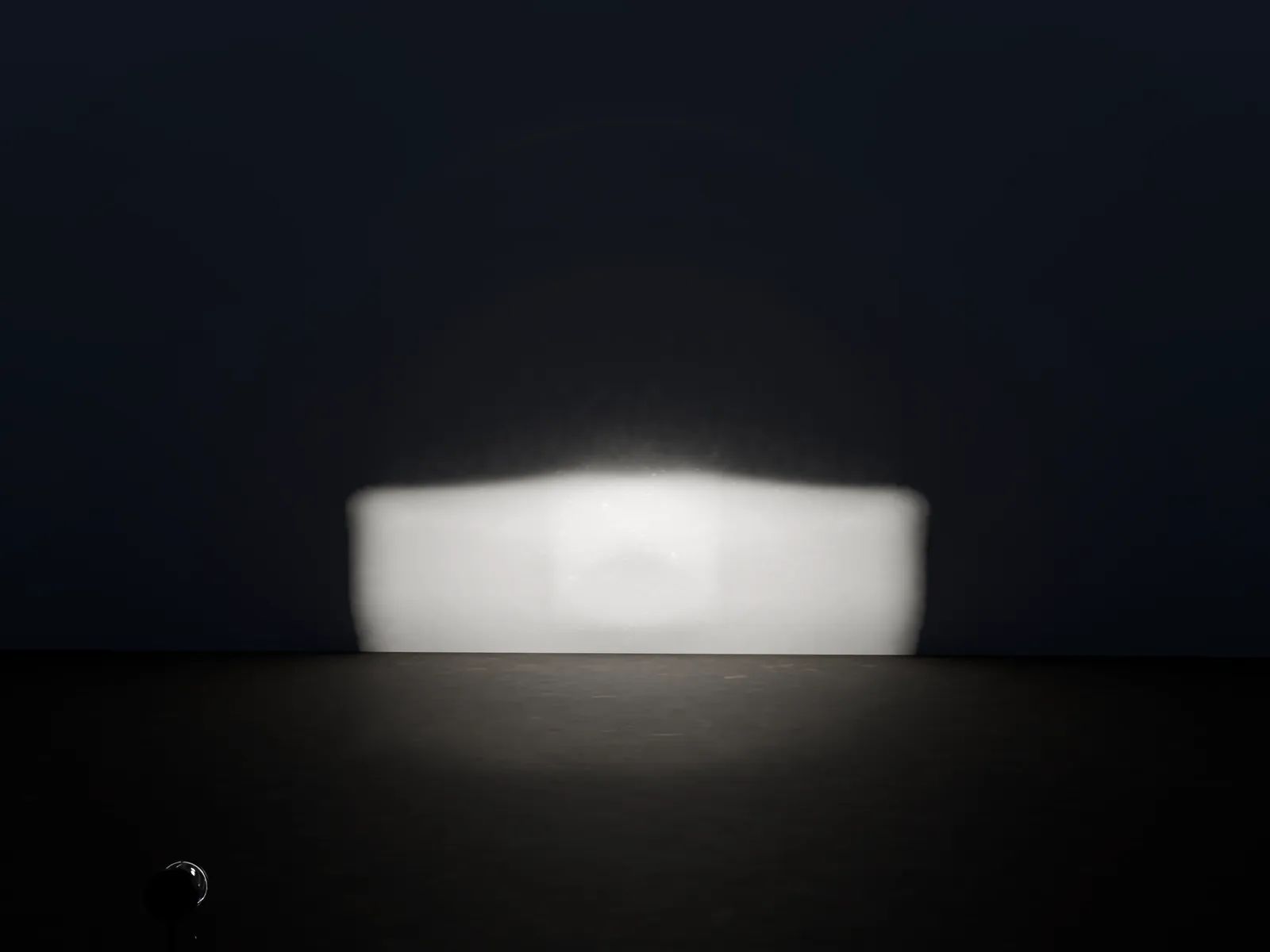
Projected on a wall 10 m away, the beam stops on a clean line, 59 cm above its centre.
Above the cut-off, the simulated illuminance stays below 0.19 lx, where 2 lx are allowed: ten times below the limit.
Seen from the front
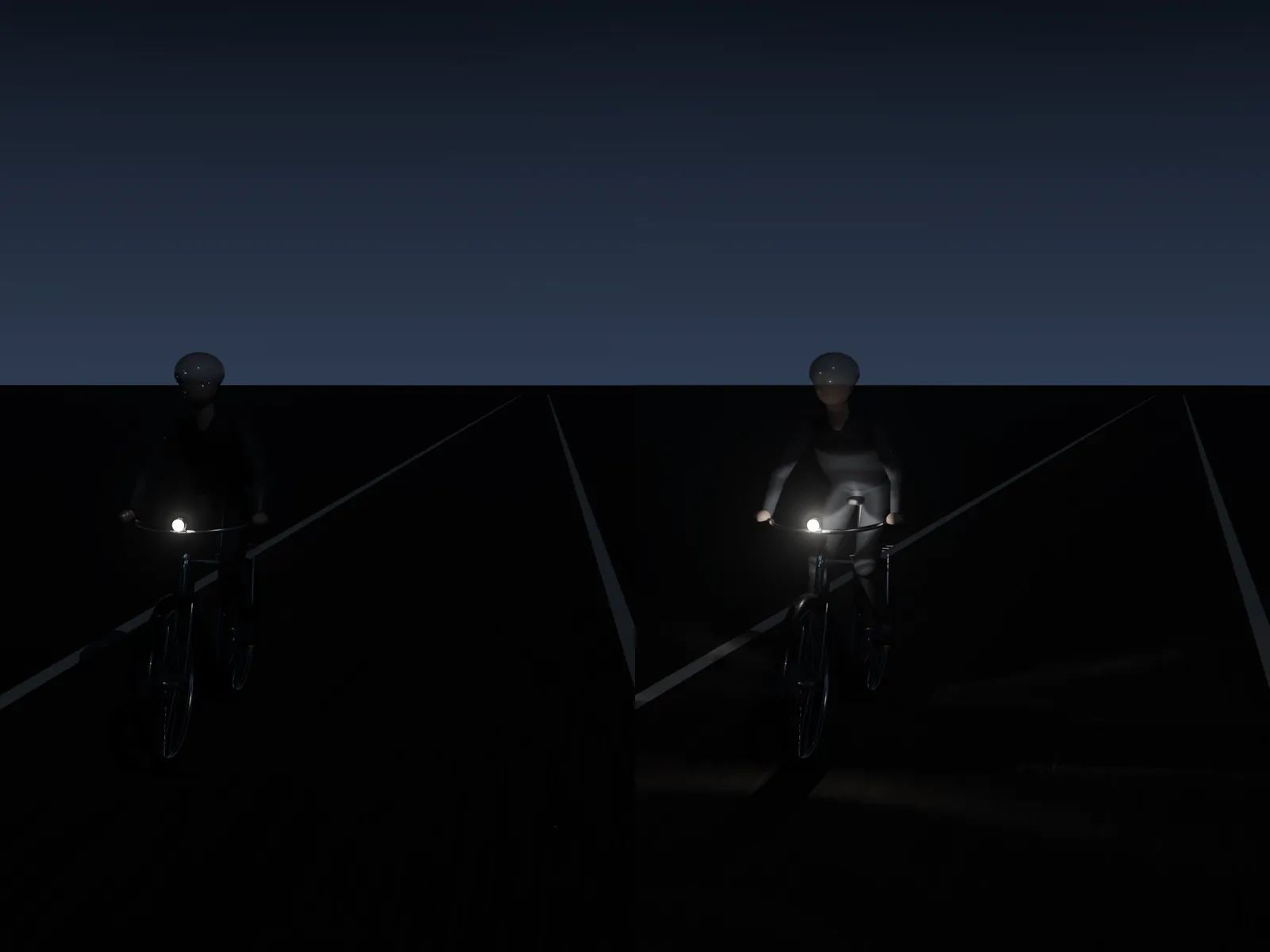
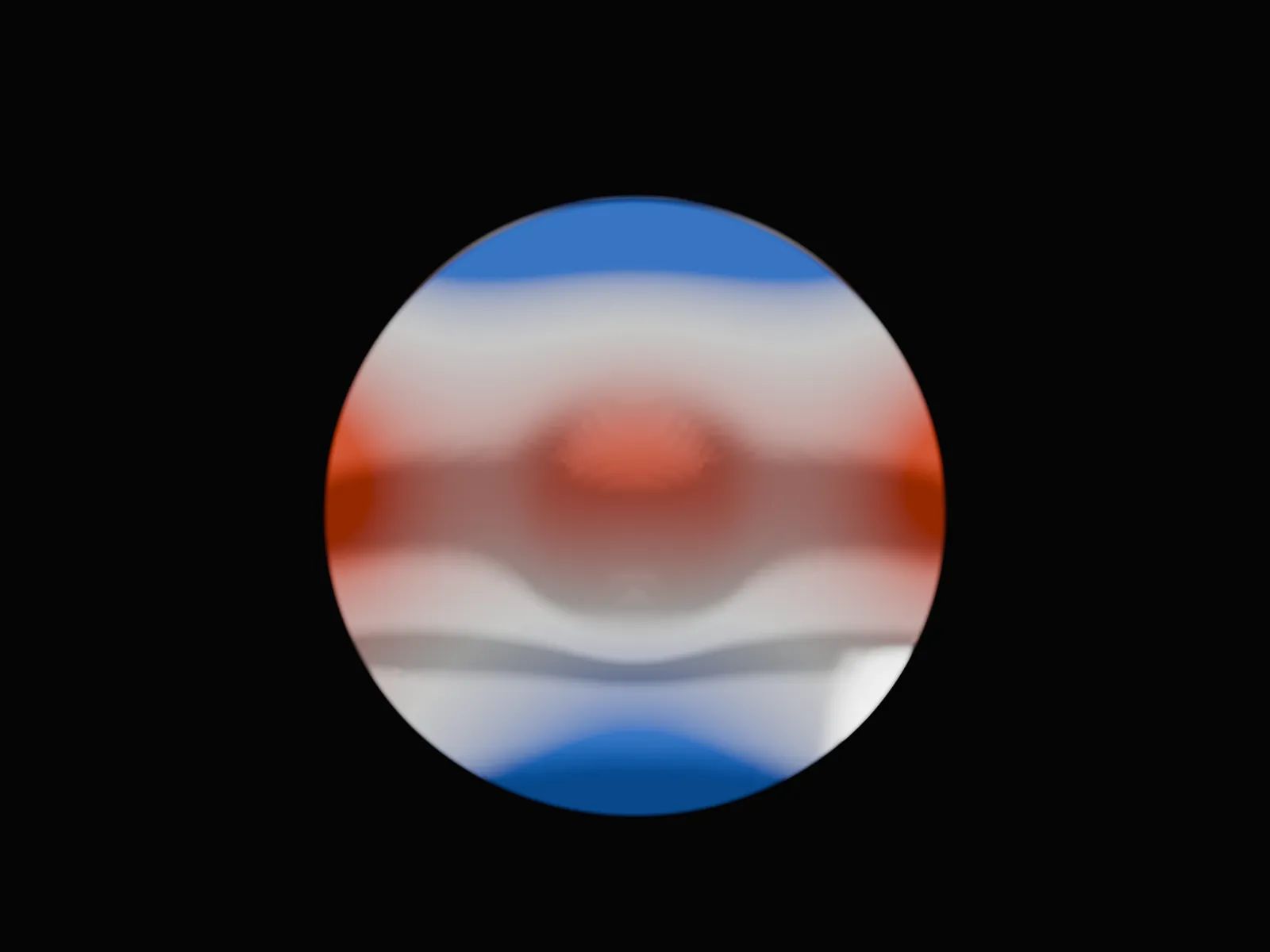
On the left (on top on a narrow screen), a round lamp with a symmetric beam and the same flux, taken as an illustrative reference. On the right (below), our optic.
At the eyes of the oncoming cyclist, our headlight gives at most 0.013 lx, against 2.2 lx for the round lamp: over a hundred times less glare.
A freeform face
The exit face has no symmetry. It is computed point by point so that every ray lands in its place on the road.
It is described in NURBS, as in CAD, and the part can be demoulded: the file goes to the mould with no conversion.
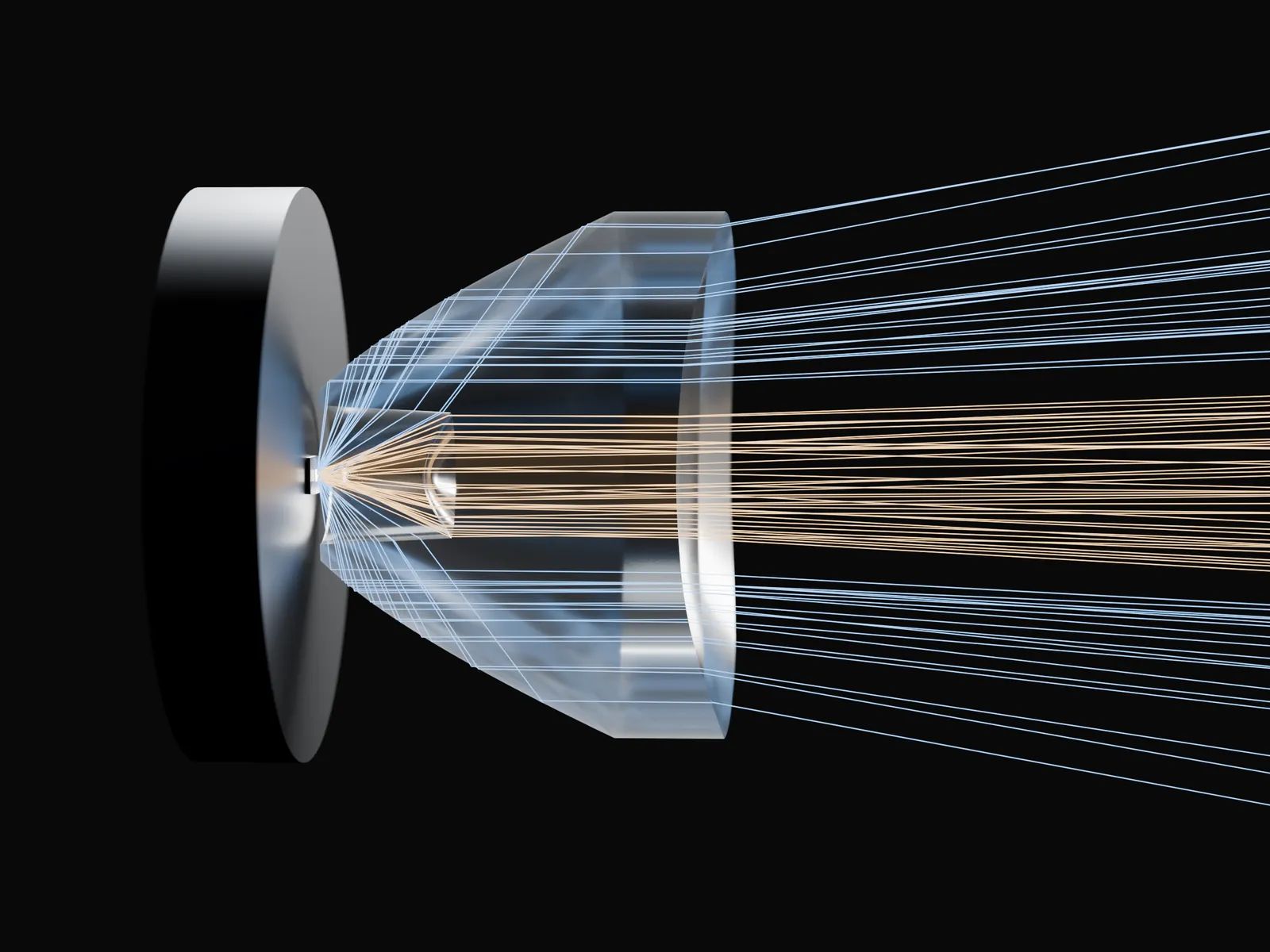
The path of light
In the centre, the LED rays are refracted. On the sides, they are sent back by total internal reflection. The freeform face then sends them below the cut-off.
These rays are not an illustration: they come from the tracing of our software, using the measured rays of the LED.
On the road
The beam reaches far ahead and stops sharply below the eyes of the people coming the other way.
The standard's grid, point by point
Illuminance in lux on a screen 10 m away, for a 100 lm LED. At each point, the simulated value (bold) and, below it, the required minimum. The shaded area above the cut-off is capped at 2 lx.
Source: Monte Carlo simulation, 10 million rays, measured rayfile of the Cree XP-P LED, PMMA, H, V map with 0.1° bins
Beyond bikes: the standards we target
The method can target any photometric goal: a set of discrete measures (intensities prescribed at given points, flux to be shared between zones) or a continuous density (a prescribed intensity or illuminance distribution). It therefore applies to every standard defined by a grid of test points, zones or a cut-off. A few of the texts a headlamp or a signal lamp has to meet:
- Micromobility: StVZO § 67 and TA No. 23 (Germany, sharp cut-off required since the 2024 version), ISO 6742-1 (cycles), JIS C 9502 (Japan), EN 15194 (e-bikes), EN 17128 (light personal electric vehicles).
- Cars and motorcycles: UN Regulations R149 (road illumination devices, which merges the former R98, R112, R113 and R123), R148 (light-signalling devices) and R150 (retro-reflectors); FMVSS 108 in the United States; GB 4599-2024 in China.
- Rail: EN 15153-1 (head lamps: 12,000 to 16,000 cd on axis in dimmed mode, anti-glare ceilings just above the axis), TSI Rolling stock LOC&PAS, 49 CFR 229.125 in the United States, EN 13272 for interior lighting.
- Aviation: CS-25 and 14 CFR § 25.1385 to 25.1401 (navigation and anti-collision lights, minimum and maximum intensities per angular sector), ICAO Annex 14 (aerodrome lighting, isocandela diagrams), SAE ARP693 (landing and taxi lights).
- Maritime and inland waterways: COLREG Annex I (navigation light sectors: sidelights must reach a practical cut-off between 1° and 3° outside their sector), ES-TRIN and EN 14744 for inland navigation.
- Street lighting: EN 13201 (road lighting performance classes), the French decree of 27 December 2018 on light pollution (less than 1% of the flux above the horizontal, CIE flux code no. 3 above 95%), ANSI/IES RP-8 and the IES TM-15 BUG rating (backlight, uplight, glare) in the United States.
What about your optics?
This headlight is just one example. A source, a target photometry, space constraints: tell us about your case, and we will tell you what our expertise can bring you.